STUDENT’S GOAL
copyright © 2008
PBI Publication
All Right Reserved
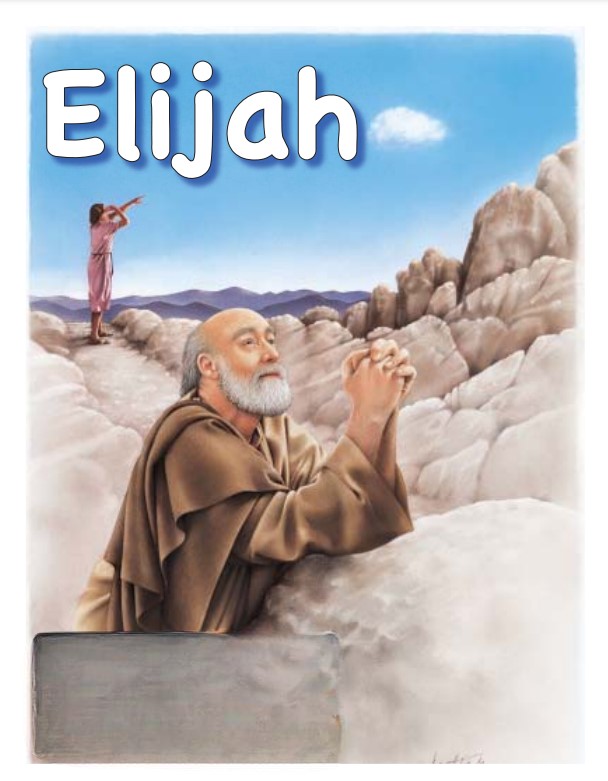
Elijah
Overview of His Life
ELIJAH [ee LIE juh] (the Lord is my God) was an influential prophet who lived in the ninth century b.c. during the reigns of Ahab and Ahaziah in the northern kingdom of Israel. Elijah shaped the history of his day
and dominated Israelite thinking for centuries afterward.
Elijah’s prophetic activities emphasized the unconditional loyalty to God required of the nation of Israel. His strange dress and appearance (2 Kings 1:8), his fleetness of foot (1 Kings 18:46), his rugged
constitution that resisted famine (1 Kings 19:8), and his cave-dwelling habits (1 Kings 17:3; 19:9) all suggest that he was a robust, outdoors-type person.
Elijah was opposed to the accepted standards of his day, when belief in many gods was normal. He appears in the role of God’s instrument of judgment upon a wayward Israel because of the nation’s widespread idolatry.
The miracles that Elijah performed occurred during the period when a life-or-death struggle took place between the religion of the Lord and Baal worship.
Elijah’s views conflicted with those of King Ahab, who had attempted to cultivate economic ties with Israel’s neighbors, especially Tyre. One of the con- sequences was that he had married Jezebel, a daughter
of Ethbaal, king of Tyre. Ahab saw no harm in participating in the religion of his neighbors, particularly the religion of his wife. Therefore, he established a center of Baal worship at Samaria. Influenced
by Jezebel, Ahab gave himself to the worship of Baal. Suddenly Elijah appeared on the scene.
Prediction of Drought. As punishment against Ahab for building the temple for Baal worship at Samaria, Elijah predicted that a drought would grip the land. Then he fled to the eastern side of
the Jordan River and later to Zarephath on the Mediterranean coast to escape Ahab’s wrath. At both sites he was kept alive through miraculous means. While staying at a widow’s home, he performed a miracle by
bringing her son back to life (1 Kings 17:1–24).
“Never was Israel so blessed with a good prophet as when it was so plagued with a bad king. Never was king so bold to sin as Ahab; never was prophet so bold to reprove and threaten as Elijah.”
—Matthew Henry

God answered by fire, and God sent the rain in answer to his prayer. But remember the confidence in prayer came from the fact of the listening ear. This is always true.
Real confidence in prayer comes from the fact that we have heard from the Lord. The listening ear is an important thing in prayer.
—Chuck Smith
Contest on Mount Carmel. After the drought had lasted three years, the Lord instructed Elijah to present himself before Ahab with the message that God would provide rain. Elijah then challenged
the 850 prophets of Baal and Asherah to a contest on Mount Carmel (1 Kings 18:21). Each side would offer sacrifices to their God without building a fire. The ignition of the fire was left to the strongest god,
who would thereby reveal himself as the true God. The best efforts of the pagan prophets through the better part of a day failed to evoke a response from Baal
Elijah poured water over his sacrifice to remove any possibility of fraud or misunderstanding about the offering. After Elijah prayed briefly to the Lord, his sacrifice was consumed by fire from Heaven. The
people of Israel responded strongly in favor of God (1 Kings 18:39). The prophets of Baal were slaughtered at Elijah’s command (1 Kings 18:40), and God sent rain to end the drought (1 Kings 18:41–46).
Flight from Jezebel. Queen Jezebel was furious over the fate of her prophets. She vowed that she would take revenge on Elijah. He fled to Mount Horeb—the mountain where Moses had received the
Ten Commandments. Like Moses, Elijah was sustained for 40 days and nights in the wilderness.
While Elijah was at Mount Horeb, the Lord revealed Himself in a low, mur- muring sound. The prophet received a revelation of the coming doom on Ahab and Israel (1 Kings 19:14). Then Elijah was given a threefold
charge: He was instructed to anoint Hazael as king of Syria, Jehu as the future king of Israel, and Elisha as the prophet who would take his place (1 Kings 19:16). These changes would bring to power those who
would reform Israel in the coming years.
Naboth’s Vineyard and the Challenge of Ahaziah. In the years of war that followed between Ahab and Ben-Hadad of Syria, Elijah did not appear (1 Kings 20). But he did appear after Jezebel acquired
a family-owned vineyard for Ahab by having its owner, Naboth, falsely accused and executed (1 Kings 21:1–29). Elijah met the king in the vineyard and rebuked him for the act (1 Kings 21:1–24). Ahab repented,
and Elijah brought him word from the Lord that the prophesied ruin on his house would not come during his lifetime, but would occur in the days of his son.
Shortly after Ahaziah, the son of Ahab, took the throne from his father, he was involved in a serious accident. He sent messengers to inquire of Baal-Zebub (“Lord of Flies”), the god of Ekron, whether he would
recover. Elijah intercepted the messengers and predicted his death because of his belief in other gods (2 Kings 1:1–17). This event would also be a fulfillment of the doom pronounced earlier upon Ahab’s house.
Twice King Ahaziah sent a detachment of soldiers to capture Elijah. But both times they were consumed by fire from heaven. The third group sent by the king begged for mercy, and an angel of God directed Elijah
to go with the commander to see the king. Elijah repeated his message of doom to Ahaziah, who soon died (2 Kings 1:9–17). Elijah’s prophecy that Jezebel would meet a violent death was also fulfilled (2 Kings
9:36).
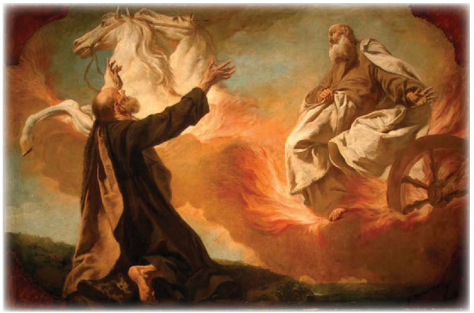
Ascension to Heaven. The prophet Elijah did not die. He was carried bodily to heaven in a whirlwind (2 Kings 2:1–11). This was an honor previously bestowed only upon Enoch (Gen. 5:24). Elisha, the
only witness to this event, picked up Elijah’s mantle which fell from him as he ascended. He carried it during his min- istry as a token of his continuation of Elijah’s ministry (2 Kings 2:13–14).
Elijah’s influence continued even after he ascended into heaven. King Jehoram of Israel received a letter from the prophet seven years after his ascension, indicat- ing that the king would be punished severely
for his sins (2 Chr. 21:12–15).
Elijah’s Contribution. The prophet Elijah understood that the nation of Israel had a mission to preserve the worship of the one true God—in a pure form without any mixture with idol worship.
Elijah was strongly opposed to the wor- ship of pagan gods such as Baal and Asherah. This uncompromising stand often endangered his life by bringing him into conflict with those in positions of power, especially
Queen Jezebel and her followers.
Elijah’s impact on the prophetic movement among the Hebrew people was extensive. He stands as the transitional figure between Samuel (the adviser and anointer of kings) and the later writing prophets. Like the
prophets who followed him, Elijah emphasized Israel’s responsibility for total commitment to their God and the covenant responsibilities that God and His people had sworn to each other. Both ideas are more fully
developed in later prophets, such as Amos and Hosea.
In later Jewish thought, the messianic age was frequently associated with Eli- jah’s return. The Old Testament spoke of the reappearance of Elijah. The prophet Malachi prophesied that the Lord would send Elijah
before the day of the Lord arrived. This prophecy was fulfilled in the coming of John the Baptist (Matt. 11:4; 17:10–13; Luke 1:17). John the Baptist was similar to Elijah in his preaching as well as his dress
and physical appearance (Matt. 11:7–8; Luke 7:24–28). During Jesus’ earthly ministry, some identified him with Elijah (Matt. 16:14; Luke 9:8).
The New Testament also mentions the reappearance of Elijah in person. Along with Moses, he appeared with Jesus on the Mount of Transfiguration (Matt. 17:3).Adapted from Nelson’s New Illustrated Bible Dictionary, (Nashville, TN: Thomas Nelson) 1997, c1995. Youngblood, Ronald F., General Editor; F.F.
Answer the following as you read the preceding overview, along with Scriptures mentioned:
- What are indications that he was a robust, outdoors-type person?
A. His strange and (2 Kings 1:8)
B. His of (1 Kings 18:46)
C. His rugged that resisted (1 Kings 19:8)
D. His - habits (1 Kings 17:3; 19:9)

Elijah served God well. He was God’s surgical knife, cutting the sore of Israel’s idolatry.
Elijah was the rod in God’s hand, chastening Israel for its disobedience.
Elijah was God’s mouthpiece, pronouncing judgment of drought on the land.
Elijah was God’s priest, offering a sacrifice for the sins of the people that brought down fire from heaven.”
—Dean Courtier
“Elijah and the widow teach us some great lessons, don’t they... Courage, obedience, faith, and what to do when life caves in.”
—Steve Malone
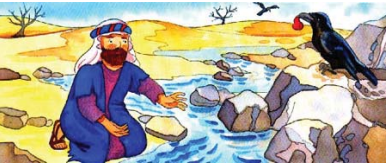
- The Lord used to feed Elijah when he hid by the brook Cherith.
- What did Elijah ask the people in 1 Kings 18:21?
- What did the people do and say after the fire of the Lord fell?
- Elijah fled from Jezebel to Mount
- What three sins of the children of Israel did Elijah confess? (1 Kings 19:14)
A. They forsook God’s
B. They threw down God’s
C. They had the with the sword. - What threefold charge did God give Elijah?
A.
B.
C. - Naboth had a that Ahab coveted
- Jezebel acquired it by having Naboth falsely and
- What happened to the first two detachments of soldiers Ahaziah sent against Elijah?
- Describe Elijah’s death:
- Who was Elijah’s successor?
Elijah
by F.B. Meyer
The Source of Elijah’s Strength
(I Kings 17)
- After the death of Solomon, his kingdom split into two parts— the under his son; the under who was desperately eager to keep his hold on his people.
- Jeroboam erected two temples, one at in the extreme north, the other at in the extreme south.
- What did Jeroboam place at each of these temples?
- 1.4 After many revolutions, and much bloodshed, the kingdom passed into the hands of a military adventurer,
- Who was this man’s son? .
- Elijah was of the inhabitants of .
- What was Elijah raised as? .
- Deeply taught in Elijah yearned for his people to give God
- When Elijah heard of how Jezebel had thrown down God’s and slain His and replaced them by her he was “very for the Lord God of hosts.”
- There was only one thing he could do, he could and he did: “he earnestly” (James 5:17).
- While in prayer, Elijah was led back to a denunciation made by to the people—that if they turned aside , and served other gods and worshiped them, the Lord’s wrath would be kindled against them; and He would shut up the , that there should be no (Deuteronomy 11:17).
- “Elijah prayed earnestly that it would not "
- Physical is a smaller calamity than moral .
- What is Elijah expressly said to have been?
. - The word “Elijah” may be rendered—Jehovah is my God; but there is another possible translation—Jehovah is my

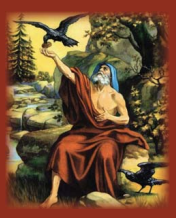
Elijah’s prayer closed up the heavens for three years and six months, and he prayed again and the heavens gave rain. James tells us that the prophet Elijah was a man “subject to like passions as we are.”
—Dwight L. Moody
Beside the Drying Brook
(I Kings 17)
True or False
- Love made Elijah all he became.
- All power is in God.
- Our Father shows us a staircase and bids us to take it in faith
- The man who is to take a high place before his fel lows, must also take a high place before his God.
- At last nothing is impossible. This is the key to Elijah’s experience
- Even if we don’t do His will on earth, He will give us our daily bread.
- And so Cherith dried up.
Ordered to Zarephath
(I Kings 17)
- Week after week, with unfaltering and steadfast Elijah watched that dwindling ; often tempted to stagger through but refusing to allow his to come between himself and God.
- To Elijah’s patient and unwavering spirit “the word of the Lord came, saying, ”
- We sketch out our and rush into it; and only when we are met by insuperable do we begin to reflect whether it was God’s or to to Him.
- We do not win salvation by our But, being saved, we must .
- What does “Zarephath” mean?
. - Did the widow have any premonition of his coming?
- Elijah was encouraged by the widow’s and asked her to bring with her a of .
- The widow only had a handful of in a barrel, and a little in a cruse; and she was about to make one last meal for and her and, having eaten it, they had no alternative but to lie down together and .
- God His people, He will not suffer us to be beyond that which we are able to .
- were certainly very depressing; but what are they to a man whose self is occupied with the presence and power of ?
- And so with heroic faith said: “Fear not; go and do as thou hast said: for thus saith the Lord God of Israel, The barrel of meal shall not , neither shall the cruse of oil until the day that the Lord sendeth upon the earth.”
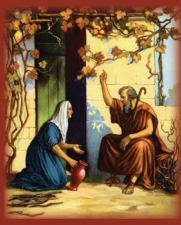
When the Kerith ravine dried up on Elijah this must have been a terrible feeling for the man of God who was in the perfect will of God. One of the worst feelings in life is the feeling that we’ve been forgotten. It must have seemed to Elijah that God had forgotten him, there by the ravine for about two years, depending on God for survival and protection then the brook dries up. God allows our brooks to dry up in life to move us along in His will because we get too comfortable sometimes.
—David Yarbrough
Often, the life of faith will lead through difficult pathways. God never promised it would be an easy way. In fact, just the opposite is true! God has promised us that life will be filled with trials and troubles, (Job 14:1; Job 5:7; John 16:33). That is often the path of faith! Yet, even when the command of God makes no sense, faith simply obeys God without regard for the consequences.That’s what Elijah did in 1 Kings 17:10
—David Yarbrough
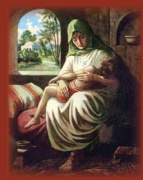
Elijah was not a celestial being, nor was he a creature from another world. James tells us, “Elijah was a man just like us” (5:17).
The question is, “Are we people of faith like Elijah? Are we willing to pray for God’s power to fall, believing so strongly that it will, that we stake our very lives on the result? We will never learned what God’s power can do if we do not pray in faith.
—Dean Courtier

“The Spirit and Power of Elias”
(I Kings 17)
- Now the humblest and weakest may be bathed in His Divine and sacred ; but in Elijah’s time, those only who were Alpine in their knew what His fullness meant.
- Elijah was one of these men filled with the .
- Elisha’s one desire was that he should be heir to the which was so manifestly upon his .
- And years after, when the angel of God spake to in the Temple, he could find no better il- lustration of the presence of the in his promised child, than by saying, “He shall go before Him in the and of Elias”.
- The glorious ministry of Elijah was due to the indwelling of the given to him through .
- We may even glory in our , that this may rest upon us more conspicu- ously, and that the glory may be more evidently .
- What three conditions must we comply, if we would receive and keep this blessed gift?
A.
B.
C. - For Elijah, the emptying process took apparently years and months.
- Elijah became emptied of and and he became filled with the Spirit of so that Carmel itself, with all its heroic deeds, was gloriously to him.
- What are the surest symptoms that He is within?
A.
B.
C.
D.
C. - “As the Father gave Me even so I do. If ye keep My ye shall abide in My ; even as I have kept My Father’s , and abide in His "(John 15:10).
- If only every who reads these lines would resolve from this hour to imitate who went and did according to the word of the Lord—not with the thought of not in the matters only, but in the crossings of the t’s, and in the dotings of the i’s—they would find at once that there would open before them a life of almost inconceivable .
- What did Elijah feed on during the long and slow-moving days?
- The widow said to Elijah: “
”. - When a man is filled with the .the more he is .the more clearly he is proved to be a of
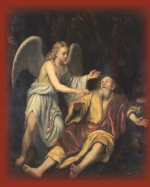
I am thankful that those men and women who were so mighty in prayer were just like ourselves. We are apt to think that those prophets and mighty men and women of old time were different from what we are. They may have lived in a much darker age, but they were of like passions with ourselves.
— D. L. Moody
The Test of the Home-life
(I Kings 17)
- If our is what it should be, it will resemble the law of gravitation; which not only controls the planets in their spheres, but guides the course of each .
- “My is sufficient for thee,” is the one answer of Jesus Christ to all ; the one reply to all and about trying circumstances.
- If the Holy Spirit is really filling the , there will come over the the least the most , a marvelous ; there will be a in speech, in the very tones of the voice; a tender n the smallest actions; a passing understanding on the face; and these shall be the evident of the Holy Ghost, the mint- mark of .
- What is the secret of giving life?
. - Elijah cried unto the Lord: “We are not enough in prayer; and we do not spend enough time in , dwelling with holy ardor on each beloved , and on each heart-rending
- Elijah measured himself upon the widow’s .
- “The Lord heard the voice of ; and the of the child came into him again, and he ”
The Plan of Campaign
(I Kings 17)
- What two things did Elijah know when he left Zarephath?
A.
B.
- Elijah neither knew nor cared to know what would become of himself; but his was on fire with a holy for the of God.
- When once a man feels that he is working out God’s and that God is working out His through him, he is .
- God’s plan is His ; and God’s shall be accomplished, though and pass away.
- God’s plan sometimes is revealed in
—not always pleasant; but ever acceptable, because revealing our Father’s . - If there is any confusion as to the will of God, it is due to one of these two causes
A.
B.
- All Israel was to be gathered by summons to , a noble site for a meeting- ground.
- He expected soon to see a nation at the of .

“And it came to pass”: that is, the predetermined counsel of Jehovah was now actualized. The fulfillment of the Divine purpose can neither be retarded nor forced by us. God will not be hurried either by our petulance or our prayers. We have to wait His appointed hour, and when it strikes, He acts—it “comes to pass” just as He had foreordained
—A.W. Pink
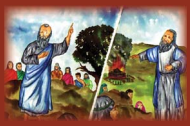
Elijah brought down fire on Mount Carmel. The prophets of Baal cried long and loud, but no answer came. The God of Elijah heard and answered his prayer.
Elijah was translated and went up to heaven, but the God of Elijah still lives. And we have the same access to Him that Elijah had.We have the same warrant to go to God and ask the fire from heaven to come down and consume our lusts and passions—to burn up our dross, and let Christ shine through us.
— D. L. Moody
The Conflict on the Heights of Carmel
(I Kings 18)
- “Elijah came unto all the people and said, How long halt ye between two opinions? What are the opinions?
A.
B. - What challenge did Elijah throw down?
- Why was this a fair proposal?
- When Elijah, therefore, proposed that each side should offer a and await an answer by , he secured the immediate of the people.
- For the first time in their existence, the were unable to insert the secret spark of among the faggots that lay upon their .
- Is it not clear that, during this age, the Church of Christ was never meant to be a visible body, but to be a great reality, consist-ing of all and spirits, in all who, holding the Head, are necessarily with each other?
- After Elijah reared the altar, laid the wood in order, and cut the bullock in pieces what did he say in order to make the miracle more wonderful?
- Whenever we can so lose ourselves in as to forget interest, and to plead for the of God, we have reached a vantage from which we can anything from Him.
- “The of the Lord fell, and the burnt and the and the and the and licked up the that was in the ?”
- If there were the same , and if any one of us exercised the same , we might again see descending.
Rain at Last
(I Kings 18)
- 8.1 There are certain characteristics in Elijah’s prayer, which we must notice as we pass; because they should form part of all true prayer.
A.
B.
C.
D.
E.
F.
G.
- God’s are given, not to restrain, but to to prayer.
- We stand on an adamant foundation, and have an irresistible pur- chase with God, when we can put our finger on His own promise and say, “ .”
- We do not pray with any of attaining and results.
- Prayer is only answered for the of Christ; but it is not answered unless it be accompanied with such as will prove that the blessing sought is really .
- Is it not always so—that the men who stand straightest in the presence of bow lowest in the presence of ?
- Faith is the indispensable condition of all true .
- The lad, from his tower of beheld on the horizon a tiny .no bigger than a man’s scudding across the .
- By his faith and prayer, Elijah brought back the to Israel.

The effectual fervent prayer of a righteous man availeth much.
EElias was a man subject to like passions as we are, and he prayed earnestly that it might not rain: and it rained not on the earth by the space of three years and six months.
And he prayed again, and the heaven gave rain, and the earth brought forth her fruit.
—James 5:16-18
We have to face up to the fact that we are in a drought. And, until this drought ends, all the programs in the world will not bring about repentance and revival in the church.
It takes God’s rain. No rain, no grain. No rain, no harvest. Elijah was a man like us who could make it rain. And today, God is looking for men and women like us, who can make it rain.
—James Jacob Prasch

How the Mighty Fell
(I Kings 19)
- Ahab’s temperament was and ; if only he had enough to and , and the and were cared for, he was content.
- What did Elijah do when he heard that Jezebel was after him?
“ .” - Elijah’s spirit seems to have become utterly and .
- Several causes account for this terrible failure.
A.
B.
C.
- We are “fearfully and wonderfully made;” and our life is very sensitive to our
Loving-kindness Better than Life
True or False
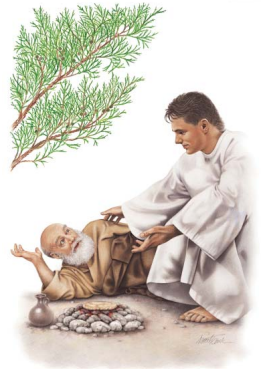
- At His command an angel, twice over, prepared a meal upon the desert sand, and touched him, and bade him eat.
- We must learn to know and believe the constancy of the love of God.
- An angel appeared to Elijah at Cherith.
- An angel appeared in the desert because a special manifestation of love was needed to convince the prophet that he was still dearly loved; and to soften his spirit; and to lead him to repentance.
- It is most likely that it was morning when the angel came the first time.
- The Lord graciously gave Elijah food in the desert which could only be explained as God’s tender love
“My God shall supply all your need according to His riches in glory by Christ Jesus” (Phil. 4:19). It is profitless to ask, How? The Lord has ten thousand ways of making good His word.
Some reader of this very paragraph may be living from hand to mouth, having no stock of money or store of victuals: yea, not knowing where the next meal will come from. But if you be a child of His, God will not fail you, and if your trust be in Him, it shall not be disappointed. In some way or other “The Lord will provide.”
—A.W. Pink
“From Genesis to Revelation, it has been the heartbeat desire of God to dwell among His people. One important aspect of that is communication and intimacy, out of which we can learn to hear His voice.
Unfortunately, many dismiss this, saying things like, “We don’t need to hear God’s voice. We have the Word.” Yes, we have God’s Word, and in the Word, Jesus says, “My sheep hear my voice” (John 10:16).
The most difficult part of hearing God is the fact that it takes time to learn to discern God’s voice—and it takes a humble heart.
Jeremiah 29:12-13 says, “Then shall ye call upon me, and ye shall go and pray unto me, and I will hearken unto you. And ye shall seek me, and find me, when ye shall search for me with all your heart..”
—Craig von Buseck
The ‘Still, Small Voice’
(I Kings 19)
- Where did Elijah go after being refreshed by sleep and food?
- What mighty things had happened on that sacred mount?
A.
B.
C.
- Elijah was bidden to stand at the to the ; but this he to do, until .
- What chain of events happened at the entrance of the cave.
A.
B.
C.
D. - Which event caused Elijah to feel the Lord?
- Elijah was most eager that his people should be restored to their to ; and he thought that it could only be done by some and .
- When Elijah stood on Carmel, and beheld the panic among the and the eagerness among the he thought that the set had come, but that was not God’s way of saving .
- What did God seem to say in this natural parable? “
- We, perhaps, accomplish less by our great efforts than we effect by a , a holy character, a .
- Our duty is to , not asking questions, not eager for great ; but content to do the will of God, , humbly, and , sure that God is not unrighteous to forget our work of and labor of

“Go, Return!”
(I Kings 19)
- What three men of God seemed to have lost their noble service through one sin?
A.
B.
C.
- MosesA. The first ill-fated king of Israel
- MosesB. Did not deliver his people from Baal
- Saul C. Brought upon himself the sentence of deposition
- Saul D. Led three men to be anointed to finish his work
- ElijahE. “Because ye believed Me not, to sanctify Me in the eyes of the children of Israel...”
- ElijahF. God spoke face to face with
- The parable of the vine is not a question as to whether we shall be or ; but whether we use the given to us, and so have them , or forfeit them by our and .
- As children, He will never cast us away; but as His He may.
Matching
It’s one thing to stand up against the workers of iniquity when you see the forces of evil at work in America— judges ruling God’s name out of school, doctors killing babies, lesbians preaching from church pulpits. You know that Satan is working against the whole body of Christ. And that is a corporate battle.
Yet it’s another thing entirely when you come face to face with an angry devil—and he’s out to get you personally! He comes after you as an individual, because you’ve made an impact in the kingdom of God. You’ve shaken hell!
—David Wilkerson
“Ahab’s response is surprising. When he heard Elijah’s words of judgment, he repented. The Lord was moved by his repentance and reported to Elijah that the announced judgment would not come upon Ahab during his lifetime, but would be deferred to the reign of his son.Thus God’s last word to Ahab is a word of grace.”
—Roger Hahn


His Vineyard
(I Kings 21)
- In a room of the palace, King of , lies upon his couch, his face towards the wall, refusing to .
- Jezebel is now standing by Ahab’s side, anxiously seeking the cause of this ; which was, perhaps, assumed to engage her , and to secure, through her which he dared not compass for himself.
- Ahab’s eye lighted on a neighboring vineyard, belonging to the .
- And Naboth said to Ahab, “
- In a few days the horrid deed of murder was perpetrated taking , his sons, and his , and left the unclaimed property to fall naturally into the .
- Elijah was called back to after perhaps five or six years.
- It is also quite possible that we are left for our own in the ways of God.
- Ahab was startled by a voice which he had not heard for years, saying “
?” - Each of the woes which foretold came true. postponed their fulfillment, by a partial for some three years; but, at the end of that time, he went back to his ways, and every item was .
- And as we close this tragic episode in his , we rejoice to learn that he was re-instated in the of ; and stamped again with the Divine of and truth.
The Old Courage Again
(II Kings 1)
- The holy men who lived in those days had never heard the gentle voice of the of speaking the on the .
- , the son of Ahab, had succeeded to his father’s throne and his father’s , leading a life in his palace.
- Ahaziah was leaning on the balustrade that fenced the flat roof of the , when suddenly it , and he himself, and was to the .
- How did Ahaziah deliberately reject Jehovah?
- What did Elijah say to the messengers? “
- Ahaziah then sent a and a troop of ; and when they were struck down in , another and his band.
- Elijah said before the soldiers: “
” And in a moment the fire leaped from its scabbard, and laid the impious blasphemers low. - Elijah went down with the third captain because the angel of the Lord said, “
.” And Elijah went down with him unto the king. - Why was Elijah able to stand so calmly beside the couch of the dying monarch, delivering his message, and retiring unharmed?
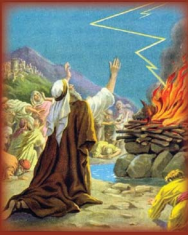
Elijah was quite a man! He simply did not fit in with the compromises of life in that day.
Many folks today think we should learn to communicate and learn to get along with everybody. But this in not God’s method. The compromise of the church and its leaders has not caused the world to listen to the church.
As a mater of fact, the world is not listening at all. They pass the church right by. Why? The world will not listen until the church declares the Word of God. If the church preached God’s word, there would be communication.
—J. Vernon McGee

Prophets of God always speak God’s Word.They are God’s mouthpiece.
—B.D. Stanford
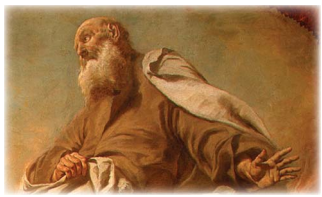
Evensong
(II Kings 2)
- Elijah’s life has been called a “
-
”. - Under direction, Elijah carefully if he did not altogether the of the .
- Elijah was the mouthpiece and spokesman of .
- These young prophets were formed into separate companies of , in different towns. They were called “ ;” the chief among them was called “ ”
- The “sons” were frequently sent forth on the errands of God’s Spirit—to anoint a ; to upbraid a high-handed ; or to take the part of oppressed and injured .
- Elijah spent the days, as he had often spent them before, visit- ing the of the , and qui-etly with his , till the swept him from his side.
The Translation
(II Kings 2)
- “They still went on, and talked; and it came to pass that there appeared a of , and of , and parted them both asunder; and Elijah went up by a into .”
- Amid the scenery familiar to Elijah’s life; in view of localities for ever associated with the most memorable events of his ; surrounded by the lonely grandeur of some rocky gorge—there God chose to send His to fetch him .
- It was easy for the men of that time to evade the force of Elijah’s , by asserting that he was an , an alarmist, a !
- The was to the life-work of Elijah what the was to that of Jesus—God’s to the world.
- It becomes us then to walk as Elijah did, with and spirit; talking only on themes that would not be with an flash into the presence of God.
- The Welsh preacher, , who, when dying, majestically waved his hand to the bystanders, and looked upward with a smile, and uttered these last words,“ !”
“Elijah was taken up to heaven in the whirlwind, not in the chariot of fire and horses of fire which merely ‘came between the two of them’ (Hebrew) and cut him off from human sight.These chariots and horsemen symbolized strong protection as well as the forces of God’s spiritual presence which were the true safety of Israel.”
(Wiseman)
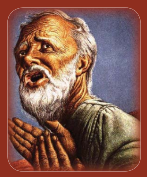
“If we experience ‘moments’ when the power of His blessed Spirit is upon us then surely it will be our desire to ask for more?”
—Iain Mackenzie
A Double Portion of Elijah’s Spirit
(II Kings 2)
- There is one incident for ever associated with the translation of Elijah; “And Elisha said,
.” - Elisha’s intent was that he might be considered as Elijah’s eldest ; the heir to his ; the successor to his . The “ ” was the right of the first born and heir.
- There is no work to which God calls you for which He is not prepared to you. Elijah himself did what he did, not by , but because through he had received such copious bestowments of the of .
- How often we persuade ourselves that we can acquire the greatest without paying the !
- How did Elijah reply to Elisha’s request for the “double portion”?
“ .” - What was made clear by Elisha seeing Elijah taken in the chariot?
- Elijah’s fluttered to Elisha’s feet, confirming at once that Heaven itself had ratified his .He knew that he had Elijah’s and was anointed with Elijah’s .
- What did the sons of the prophets say when they saw Elisha part the waters and cross over? “
.”
“Filled With the Holy Ghost”
(Luke 1:15, 17)
True or False
- Elijah was a man of like passions with ourselves
- Elijah subdued kingdoms through faith.
- Elijah wrought righteousness and obtained promises.
- Elijah was broken by weakness.
- Elijah waxed valiant in fight.
- Elijah was swept to heaven after death.
- Elijah was the Prophet of Fire.
Excellent Good Fair Needs Improvement
Elisha had the audacity to not only desire to be like him, but to have a double portion (twice as much!) of that which Elijah displayed! Some could even have accused Elisha of being brash, erratic, or proud in his desire, but Elisha knew what he wanted, and he went after it.
It is recorded that Elijah did eight major miracles and Elisha sixteen, confirming he did indeed minister in a double portion of Elijah’s spirit.
God certainly did not rebuke Elisha for his great desire to have a double portion of Elijah’s spirit—He enabled him to fulfil it!”
—Rodney W. Francis
The lesson to be learned from this is that we must pray for the Holy Spirit for service; pray that we may be anointed and qualified to do the work that God has for us to do.
I believe that Elisha was a child of God before Elijah met him; but he was not qualified for the work of a prophet until the spirit of Elijah came upon him..
We have to ask for this blessing, to knock for it, to seek for it. And if it does not come, we must find out why.
If we regard iniquity in our hearts, if we have some hidden sin, God is not going to give us the baptism of power. We are not as “an empty vessel”; we are not ready to receive the blessing, and so it doesn’t come.
—D.L. Moody

Use Your Bible To Match the Following:
Facts from the Life of Elijah
| 1. Hides by the brook Cherith | A. 1 Kings 19:1-3 |
| 2. Fed by ravens | B. 1 Kings 17:3 |
| 3. Fed by widow | C. 1 Kings 19:9-14 |
| 4. Overthrows Baal prophets | D. Luke 1:17 |
| 5. Flees from Jezebel | E. Matthew 17:1-4 |
| 6. Hears God | F. 1 Kings 18:17-46 |
| 7. Appears with Christ | G. 1 Kings 17:8-16 |
| 8. John the Baptist resembled him | H. 2 Kings 2:1-15 |
| 9. Taken up to Heaven | I. 1 Kings 17:4–7 |
The Miracles of Elijah
| 1. Meal and oil mulitiplied | A. 1 Kings 18:41-45; James 5:18 |
| 2. Drought | B. 2 Kings 2:8 |
| 3. Child restored to life | C. 2 Kings 1:10-12.Luke 9:54 |
| 4. Sacrifice consumed by fire | D. 1 Kings 18:24, 36-38 |
| 5. Calls fire down upon soldiers | E. 1 Kings 17:17-24 |
| 6. Brings rain after 3 1/2 year drought | F. 1 Kings 17:1,James 5:17 |
| 7. Divides waters of Jordan | G. 1 Kings 17:14-16 |