Student Instructions for Online Courses
with interactive PDF’s
How to Answer Questions
Each answer blank is a data field. The field should show up as a blue box. Click in the field and type your answer. Use the tab key to move from field to field.
Special Instructions
Page 2: Enter your name, address etc. in the appropriate fields. Your Name on Page 2 is a required field.
When finished with questions
Click the ‘Email Answers’ button found on the last page. (You will need to be connected to the internet and have an email program on your computer.) If you use webmail, simply login and attach the PDF file to a new email.
Email completed course answers to: mail@patriotuniversity.com
To save your answers prior to finishing the course
- Simply click the ‘Save Answers’ button. In the ‘Save As’ window that appears, click to the location where you want the filed saved at. Then click ‘Save’.
- * Tip - Save the file to your Desktop, floppy disk, CD or a special folder you can find later.
- To continue the course, find the saved PDF file and double click on it. It will open in Adobe Reader.
- * Tip – Create a folder in your Documents folder named Patriot Courses. Save your courses in it.
STUDENT'S GOAL
In Revelation 1:19, the Lord gives His own outline for this great book when He tells John to write:
- The things which thou hast seen (Chapter 1)
- The things which are (Chapters 2 and 3)
- The things which shall be hereafter (Chapters 4-22)
So we see that the book of Revelation deals with the past and the present, as well as with the future. This study deals with “the things which are” (chapters two and three). The messages to the churches are for today, the “today” when John wrote these words and the today we live in as we await the sound of His trumpet!
The seven churches were in Asia Minor within a circle 100 miles in diameter. The cities where they were located formed the “Great Circle Postal Route” of what is now known as Western Turkey. (Draw a line from city to city on the above map, making a circuit moving from Ephesus to Smyrna and continuing until coming last to Laodicea).
The seven local assemblies were first listed together in verse 11 of the first chapter. They are portrayed as “seven golden candlesticks” or lampstands, with Christ in the midst (1: 12-20).
Christ in the midst (1: 12-20). Before His ascension the Lord Jesus told His followers, “Ye are the light of the world.” But we are not the originators of that Light. Christ is the Light and the Holy Spirit is often referred to as oil. It is through the Holy Spirit that the light of Jesus Christ is produced in us. He provides the Light, just as oil or electricity provide the light for a lampstand. Churches radiate His light as His lampstands.
These two chapters make up one-eighth of the book of Revelation. They are often neglected by Bible students. But since Christ Himself selected these churches for close scrutiny, it is wise for us to study them carefully.
Many Bible scholars agree that the messages to these churches may be applied in three ways:
- THE SEVEN CHURCHES IN JOHN’S DAY
- THE SEVEN BASIC DIVISIONS OF HISTORY
- Ephesus
- Smyrna
- Pergamos
- Thyatira
- Sardis
- Philadelphia
- Laodicea
- Apostolic Church
- Persecuted Church
- State Church
- Papal Church
- Reformed Church
- Missionary Church
- Apostate Church
- 30-100 A.D.
- 100-313 A.D.
- 313-590 A. D.
- 590-1517 A.D.
- 1517-1790 A.D.
- 1730-1900 A.D.
- 1900- A.D.
- SEVEN TYPES OF CHURCHES THAT EXIST TODAY
These churches actually existed in 95-96 A.D. when John wrote the book of Revelation. So each message met a specific need for the particular church addressed.
HE SEVEN BASIC DIVISIONS OF HISTORY. The characteristics of these churches seem to form a panoramic account of seven distinct periods in church history, from before Pentecost until the Rapture (or, as Dr. J. Vernon McGee puts it, “from the upper room to the upper air”).
Some have opposed this theory, believing that it means Christ’s coming could not have been “imminent” (at any moment). But the periods could have run their course by 100 A.D. if God so chose. As it is, the Laodicean age may be finished in the 1990’s. The following ages have been suggested:
Some have carried this application to extreme. They have permitted the idea of a present Laodicean-type, apostate age to discourage them from working for Christ ... believing that God’s revival blessings cannot fall upon our churches today. Yet man fundamental churches and missionary endeavors witness multitudes turning to Christ and great movements of the Holy Spirit upon God’s people.
rning to Christ and great movements of the Holy Spirit upon God’s people. The typical church of today is apostate. But in every “age” there have been many exceptions to the typical. Remember, the church of Laodicea, literally existed during the great Apostolic age portrayed in the book of Acts
Or perhaps both Philadelphia and Laodicea, picture church conditions in the world today.
We can be certain of one thing: It is not God’s will that any Christian be lukewarm, nor that any church be like Laodicea. The choice has been given to us.
Actually the influence and some trends of all seven churches still exist today. Twentieth century believers can learn from and identify with all seven churches.
entieth century believers can learn from and identify with all seven churches. These churches also reveal seven methods of attack Satan uses against churches and their members. As we apply these messages to our own situation we are reminded of the necessity of “putting on the whole armor of God” and of resisting the devil.
Answer the following:

- What is the Lord’s outline for the book of Revelation?
- List the seven churches with the Scripture passage that describes each:
- The seven churches were in Asia
, in what is now Western
,within

a circle miles in diameter. - How are the churches portrayed in Revelation, chapter one?
- These two chapters make up one- of the book of Revelation.
- How can the messages to these churches be applied?
- When did John write the book of Revelation?
- Perhaps both and picture church conditions in the world today.
- These churches reveal seven of attack uses against churches and their members.
- Define apostate:
Ephesus
Revelation 2:
- UNTO the angel of the church of Ephesus write; These things saith he that holdeth the seven stars in his right hand, who walketh in the midst of the seven golden candlesticks;
- I know thy works, and thy labour, and thy patience, and how thou canst not bear them which are evil: and thou hast tried them which say they are apostles, and are not, and hast found them liars:
- And hast borne, and hast patience, and for my names sake hast laboured, and hast not fainted.
- Nevertheless I have somewhat against thee, because thou hast left thy first love.
- Remember therefore from whence thou art fallen, and repent, and do the first works; or else I will come unto thee quickly, and will remove thy candlestick out of his place, except thou repent.
- But this thou hast, that thou hatest the deeds of the Nicolaitanes, which I also hate.
- He that hath an ear, let him hear what the Spirit saith unto the churches; To him that over cometh will give to eat of the tree of life, which is in the midst of the paradise of God.
- Who or what does each of the following refer to?
- How is Christ portrayed in verse one?
- Verses , and give commendation. Verse gives condemnation. Verses and give instructions.
- Ephesus was not living up to its name, which
 .
. - What steps did God command this church to take?
- What would happen to them if they refused to obey these commands?
- What would God give them if they obeyed these commands?
- Paul wrote concerning Ephesus: “For a great door and effectual is opened unto me, and there are many adversaries” (I Corinthians 16:9). Opportunity leads to opposition. Give the passage in Acts that shows the forms this opposition took in Ephesus:
- What did Paul do when he first entered Ephesus?
- On his second visit he spent months boldly preaching and teaching.
- When some in the synagogue rejected the Gospel Paul and the young converts spent every day for the next years reasoning in the school of . During this time all of heard the Gospel.
- After miraculous days of victory in God’s work, a riot against the Christians was instigated by a silversmith named
. This man had
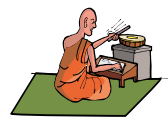 been making a fortune crafting silver shrines to the goddess
- Ephesus is the only one of the seven churches of Revelation concerning which we have much scriptural information and that is recorded largely in , chapters eighteen through .
- Who taught from house to house, warning everyone night and day with tears, so he was a pastor?
- Ephesus was devoted to the worship of and there was a big business of making shrines for this goddess.
- Paul did not shake Ephesus by lecturing about He preached the and when people came to know the they had no further use for .
- Our Lord tells them (Ephesians) three things. He tells them what is right in the church, what is wrong in the church, and what to do about it. He begins with commendation because He always commends where and when He can. He says:
- The church has a right to screen out the while it lets in the
- Only the restraining power of the in God’s people keeps from totally engulfing the world and, once the church is removed, you might as well try to dam up Niagara Falls with toothpicks as to hold back the floods of from completely submerging mankind.
- In the midst of abounding lawlessness, abates.
- One may do a thing in a way.
- What is the Christians first love?
- for the brethren, for the church, for church work, all grow out of for the Lord.
- All these messages of our Lord to the Asian churches were given first to the of the church, the the .
- God help us to remember, repent and repeat, that there may be and not .
A. “the angel of the Church”—
B. “the seven stars in His right Hand”—
C. “the seven golden candlesticks”—
Read chapters eighteen through twenty in the book of Acts to learn more about the city of Ephesus.

Read chapter 2 in “Messages on Revival,” by Vance Havner, and answer the following:
B. “I know. . .thy …”: it was toilsome .

C. “. . .and thy …: they did not go by and , but were .
D. “…and how thou canst not bear them which are …”: the church used
Smyrna
Revelation 2:
- And unto the angel of the church in Smyrna write; These things saith the first and the last, which was dead, and is alive;
- 1 know thy works, and tribulation, and poverty, (but thou art rich) and I know the blasphemy of them which say they are Jews, and are not, but are the synagogue of Satan.
- Fear none of those things which thou shalt suffer: behold, the devil shall cast some of you into prison, that ye may be tried; and ye shall have tribulation ten days: be thou faithful unto death and I will give thee a crown of life.
- He that hath an ear, let him hear what the Spirit saith unto the churches; He that overcometh shall not be hurt of the second death,
- What tides does Christ use concerning Himself in addressing Smyrna.?
- In what verses are the titles referred to in chapter one? and
- What three things accompanied the faithful works of these believers?

- Christ called the slandering Jews the of
.
- What two things did Christ command this church to do?
- What two promises did He make to these faithful Christians.?
- The message to Smyrna is the of all the letters to the seven churches.
- To the saints at Smyrna the Christ of the Candlesticks says, “I know thy…...” This refers to they would not have had if they had not been
- Our Lord said, “Blessed are ye, when men shall revile you, and persecute you, and shall say all manner of evil against you falsely, for my sake” (Matthew 5: 11). Notice two qualifications to this reviling: it must be and for His
- Our Lord’s word for “rich” in this passage is the source of our word ""
- It would appear that “gain is godliness” with us in spite of Paul’s formula that plus equals prosperity.
- To these suffering saints the Lord of the Lampstands has two words of admonition:

- They were precious in the Lord’s eyes, not merely because they were poor and persecuted but because they were to the point of and and even itself.
- If we feared the death as we fear the we might have a revival.
- We may never be martyrs but we can die to , to , to the , to our , and
Read chapter 3 in “Messages on Revival,” by Vance Havner, and answer the following:
Pergamos
Revelation 2:
- And to the angel of the church in Pergamos write; These things saith he which hath the sharp sword with two edges;
- 1 know thy works, and where thou dwellest, even where Satans seat is: and thou holdest fast myname, and hast not denied my faith, even in those days wherein Antipas was my faithful martyr, who was slain among you, where Satan dwelleth.
- But I have a few things against thee, because thou hast there them that hold the doctrine of Balaam, who taught Balac to cast a stumblingblock before the children of Israel, to eat things sacrificed unto idols, and to commit fornication.
- So hast thou also them that hold the doctrine of the Nicolaitanes, which thing I hate.
- Repent; or else I will come unto thee quickly, and will fight against them with the sword of my mouth.
- He that hath an ear, let him hear what the Spirit saith unto the churches; To him that over cometh will I give to eat of the hidden manna, and will give him a white stone, and in the stone a new name written, which no man knoweth saving he that receiveth it.
- What does the sword represent? Verse in chapter one says “out of His mouth went a sharp two-edged sword.”
- In Ephesians 6:17 the Word of God is called “the of the
- Hebrews 4:12 says “…the Word of God is (alive), and powerful, and than any - , piercing even to the dividing asunder of and , and of the and , and is a of the and of the ."
- What will the Lord do with the Wicked one, according to II Tbessalonians 2:8?
- The wickedness in Pergamos Christ associated them with the name of twice in verse . What two phrases described their steadfastness despite this horrible atmosphere?
- Who had already died for the faith in Pergamos?

- God was displeased with their tolerance of the false teachings of:
- What two things did He promise for overcomers, according to this message?
- What is the correct spelling of this city? "
- What was the city noted for?
- Where did the city get its name?
- God advised this church to “ ; or ...”
- Pergamos was such a wicked city that our Lord called it the place “where seat is” and “where dwelleth.”
- Can a church be a working church; be true to the name of Christ; be loyal to the faith and still need a revival?
- The trouble at Ephesus was ; at Pergamos it was .
- There were in the church at Pergamos who saw no harm in mixing with the and their heathen practices.
- What Scripture tells us that the man who makes sinning his business has neither seen nor known God?
- We when we what God condemns and look some other way instead of with it.
- Churches used to their members both for the welfare of the and the

In Turkey, the city is called Pergamum, which is evidently the correct spelling today. The city was famous as a center of four pagan cults (Zeus, Athena, Dionysus and Esclepius) and the seat of the blasphemous Emperor worship.
Not only did it boast magnificent temples to these false gods, but it also had a library containing the equivalent of over 200,000 volumes ... the greatest library of the pagan world. In fact, the city got its name from the parchment (Pergamena) which was used.
Read chapter 4 in “Messages on Revival,” by Vance Havner, and answer the following:
Thyatira
Revelation 2:
- And unto the angel of the church in Thyatira write; These things saith the Son of God, who hath his eyes like unto a flame of fire, and his feet are like fine brass;
- I know thy works, and charity, and service, and faith, and thy patience, and thy works; and the last to be more than the first.
- Notwithstanding I have a few things against thee, because thou sufferest that woman Jezebel, which calleth herself a prophetess, to teach and to seduce my servants to commit fornication,and to eat things sacrificed unto idols.
- And I gave her space to repent of her fornication; and she repented not.
- Behold, I will cast her into a bed, and them that commit adultery with her into great tribulation except they repent of their deeds.
- And I will kill her children with death; and all the churches shall know that I am he which searcheth the reins and hearts: and I will give unto every one of you according to your works.
- But unto you I say, and unto the rest in Thyatira, as many as have not this doctrine, and which have not known the depths of Satan, as they speak; I will put upon you none other burden.
- But that which ye have already hold fast till I come.
- And he that overcometh, and keepeth my works unto the end, to him will I give power over the nations:
- And he shall rule them with a rod of iron; as the vessels of a potter shall they be broken to shivers: even as I received of my Father.
- And I will give him the morning star.
- He that hath an ear, let him hear what the Spirit saith unto the churches.
- The first convert in Europe was from Thyatira. What was her name? (See Acts 16).
- In the opening verse Christ is referred to as:
- What verses in chapter one give a similar description? and .
- What six virtues are commended?
(love)
(ministry)
Their last greater than the first.
- What two things did the Jezebel cult teach?
- , who was converted under Paul’s ministry in Philippi, was a woman of Thyatira. and a seller of purple.
- The trouble in Thyatira stemmed from tolerance of a woman named .
- Many false religions and modern delusions were begun by

- The Word of God is any time of the day!
- Any that makes it easier to sin is of the devil.
- Throughout the Bible He uses the relationship to set forth the union of Himself and His people in the Old Testament and that of Christ and the in the New Testament.
- We are under an hypnotic spell. and morally paralyzed by the notion that and can buy peace and security.
- We are told to reject a after the first and second admonition (Titus 3:10).
- The churches of Pergamos and Thyatira were Get-Alongers and they tried to to the situation instead of the situation.
- God’s people go by and not by
The source of trouble in Thyatira was centered around a woman called Jezebel. This woman Jezebel is accused of teaching two things: (1) teaching the Christian people to commit fornication, and (2) to eat meat offered to idols. Often the best meat was that which had been offered to idols.
And with the meat, here in Thyatira, came the idolatrous customs and ceremonies. Here is where the Jezebel cult came in. It was insisted that there was no harm in accepting the world’s customs and the world’s ways. In effect it was saying if the standards of the Word of God clashed with business interests, then the standards of God in those instances must be abandoned.
The Jezebel cult would argue that there was no harm in conforming to the outward rituals and ceremonies of this world ... that by being sensible in these things, we will win the heathen much much more easily.
NOTE: “Sufferest” means “allows” or “Permits.” “Seduce means to “mis ead.”
Read chapter 5 in “Messages on Revival,” by Vance Havner, and answer the following:
Sardis
Revelation 3:
- AND unto the angel of the church in Sardis write; These things saith he that hath the seven Spirits of God, and the seven stars; I know thy works, that thou hast a name that thou livest, and art dead.
- Be watchful, and strengthen the things which remain, that are ready to die: for I have not found thy works perfect before God.
- Remember therefore how thou hast received and heard, and hold fast, and repent. If therefore thou shalt not watch, I will come on thee as a thief, and thou shalt not know what hour I will come upon thee.
- Thou hast a few names even in Sardis which have not defiled their garments; and they shall walk with me in white: for they are worthy.
- He that overcometh, the same shall be clothed in white raiment; and I will not blot out his name out of the book of life, but I will confess his name before my Father, and before his angels.
- He that hath an ear. let him hear what the Spirit saith unto the churches.
- Verse one refers to the seven Spirits of God, the completeness of the Holy Spirit as found in Christ. Isaiah 11:2 reveals these as:
the Spirit of the
the Spirit of
the Spirit of
the Spirit of
the Spirit of
the Spirit of
the Spirit of the of the - What kind of reputation did this church have?
- What was the truth about them?
- What five things are they commanded in verses 2-4?
- What is promised to the overcomers (born-again believers)?
- Sardis was but never would have admitted it.
- The Christ of the Candlesticks states the trouble at Sardis thus: “I have not found thy perfect before God.”
- The Lord of the Lampstands tells Sardis to, “be , and the things which remain…” In other words, make them something.

- The church at Sardis needed to , to confess its , to put away , to be filled with the , to put and into all these things they were doing.
- There is a note of warning because Sardis is not ready for His
- The real life of the church is in a faithful people who keep it from being an animated .
- Our righteousness is but we have responsibility to keep our garments clean.
- Straight is the gate and narrow the way that leads to life and there be that find it.
Read chapter 6 in “Messages on Revival,” by Vance Havner, and answer the following:
Philadelphia
Revelation 3:
- And to the angel of the church in Philadelphia write; These things saith he that is holy, he that is true, he that hath the key of David, he that openeth, and no man shutteth; and shutteth, and no man openeth;
- 1 know thy works: behold, I have set before thee an open door, and no man can shut it: for thou hast a little strength, and hast kept my word, and hast not denied my name.
- Behold, I will make them of the synagogue of Satan, which say they are Jews, and are not, but do lie; behold, I will make them to come and worship before thy feet, and to know that I have loved thee.
- Because thou hast kept the word of my patience, I also will keep thee from the hour of temptation, which shall come upon all the world, to try them that dwell upon the earth.
- Behold, I come quickly: hold that fast which thou hast, that no man take thy crown.
- Him that overcometh will I make a pillar in the temple of my God, and he shall go no more out: and I will write upon him the name of my God, and the name of the city of my God,which is new Jerusalem, which cometh down out of heaven from my God: and I will write uponhim my new name.
- He that hath an ear, let him hear what the Spirit saith unto the churches.
- What titles does Christ use concerning Himself in addressing Philadelphia?
- How is the Greek word “philadelphia” translated in Hebrews 13:1? " "
- What three good things did these believers still have?
- The Lord spoke of people who falsely claim to be
- What will Christ make these impostors do?
- What do you think “the hour of temptation refers to?
- What will Christ write upon the born-again believers?
- The church at Philadelphia, like the church at was not bidden to repent.
- Christ alone has the keys to house and when He shuts it, no man can open.
- is the Church of the Closed Door but is the Church of the Open Door.
- is always in a hurry, but God’s man can afford to await the vindication of time.

- The Philadelphia period is with the Laodicean era.
- The great tribulation shows up in verse . And our Lord’s return breaks through in verse .
- We are saved by faith but rewarded according to and men can us of our .
- Dr. Torrey said: “We hear much of the of faith, but there is a of faith in as well as in .
- Every man must study his own case and whatever endangers his crown he must .
- Never forget that the man most likely to steal your crown is .
- Write out II John 8:
Read chapter 7 in “Messages on Revival,” by Vance Havner, and answer the following:

Laodicea
Revelation 3:
- And unto the angel of the church of the Laodiceans write; These things saith the Amen, the faithful and true witness,, the beginning of the creation of God;
- 1 know thy works, that thou art neither cold nor hot: I would thou wert cold or hot.
- So then because thou art lukewarm, and neither cold nor hot, I will spue thee out of my mouth.
- Because thou sayest, I am rich, and increased with goods, and have need of nothing; and knowest not that thou art wretched, and miserable, and poor, and blind, and naked:
- 1 counsel thee to buy of me gold tried in the fire, that thou mayest be rich; and white raiment, that thou mayest be clothed, and that the shame of thy nakedness do not appear; and anoint thine eyes with eyesalve, that thou mayest see.
- As many as I love, I rebuke and chasten: be zealous therefore, and repent.
- Behold, I stand at the door, and knock: if any man hear my voice, and open the door, I will come into him, and will sup with him, and he with me.
- To him that overcometh will I grant to sit with me in my throne, even as I also overcame, and am set down with my Father in his throne.
- He that hath an ear, let him hear what the Spirit saith unto the churches.
- What titles does Christ use concerning Himself in addressing Laodicea?
- This is the only one of the seven about which Christ had nothing to say.
- What will the Lord do with these indifferent church members? ""
- What did they say about themselves?
- What did God know about them?
- What counsel did God give to this church?
- What is one way that Christ shows His love? “ ”
- What should a church (or individual) do when Christ knocks?
- What will Christ then do?
- Born-again believers will be granted permission to with Christ in His .
- Where is Christ now?
- “He that hath an , let him what the saith unto the .”
- The condition of the Laodicean church was
- Smyrna was a church and Laodicea was a church.
- To cap the climax, the Lord of the Lampstands said to Laodicea, “Thou are .”
- The only way to build a life is to use materials.
- is the opposite of lukewarmness and His love will give us hearts if we obey His call.
- It is the Age of Laodicean Lukewarmness and the Lord of the Lampstands is saying to it, “Be and .”
- To every one of these five ailing churches our Lord says in effect, “...or .”
- Those who need most to go to the mourner’s bench are usually those souls who others and never dream that they should have been the to walk the aisle.


Read chapter 8 in “Messages on Revival,” by Vance Havner, and answer the following:
Complete the following chart
The Seven Churches of Revelation
| Commendation I know thy... |
Condemnation | Counsel I counsel thee... |
Challenge To him that overcometh |
|
|---|---|---|---|---|
 |
||||
 |
||||
 |
||||
 |
||||
 |
||||
 |
||||
 |